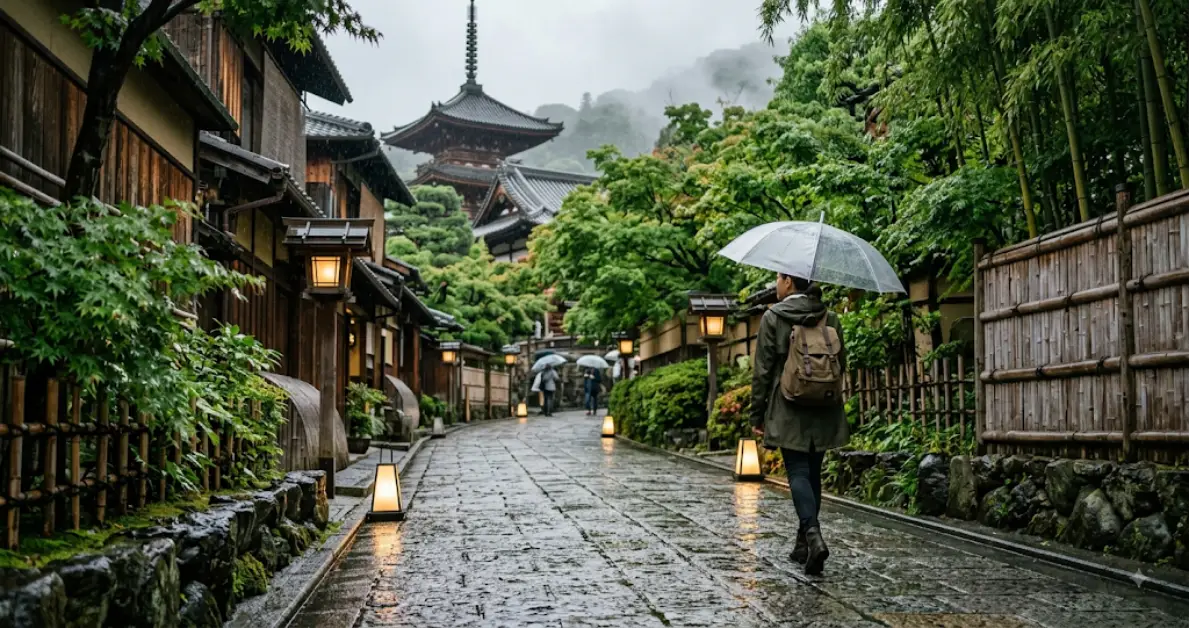
Japan is a destination for every season, but monsoon travel offers a completely different way to experience the country. During the rainy season, Japan’s cities become greener, gardens look more vibrant, mist settles over mountains and temples, and the countryside takes on a peaceful atmosphere.
For travelers who do not mind occasional rain, rainy season travel in Japan can be rewarding and, in some places, less crowded than the peak summer and cherry blossom periods. From atmospheric temples in Kyoto to lush landscapes and relaxing hot springs, there are plenty of ways to enjoy a monsoon vacation without letting wet weather ruin your plans.
If you are considering a monsoon trip to Japan, proper planning is important. Choosing the right destinations, packing suitable clothing and keeping flexible plans can make your journey much more comfortable.
When Is the Rainy Season in Japan?
Japan’s rainy season, commonly known as tsuyu, generally occurs from around June into July across much of the country, although the timing varies by region.
The season does not necessarily mean that it rains continuously throughout the day. Instead, travelers can experience a combination of cloudy skies, short periods of rain, humid weather and occasional heavier showers.
This makes Japan an interesting choice for travel during monsoon, particularly for visitors who enjoy photography, nature, food, culture and indoor attractions.
Northern regions and Hokkaido generally experience different weather patterns from much of the rest of Japan, making them attractive options for travelers looking for alternatives during the wetter period.
Best Places to Visit in Monsoon in Japan
Japan has many destinations that remain enjoyable when the weather turns wet. Some are especially beautiful because of the rain.
1. Kyoto
Kyoto is one of the best places to visit in monsoon if you enjoy traditional architecture, gardens and cultural experiences.
Rain can give Kyoto’s temples and gardens an especially atmospheric appearance. Moss-covered grounds become greener, stone paths look dramatic after rainfall, and mist can add a beautiful backdrop to historic locations.
Visitors can explore temples, traditional streets, tea houses and museums between showers.
Kyoto is also ideal for a flexible itinerary because many attractions are relatively close together.
2. Tokyo
Tokyo is another excellent choice for rainy season travel.
The city has countless indoor attractions, including shopping centres, museums, restaurants, cafés, entertainment districts and cultural venues.
When rain makes outdoor sightseeing uncomfortable, travelers can easily change plans and spend several hours exploring indoor attractions.
Tokyo’s modern cityscape can also look spectacular after rainfall, particularly in the evening when illuminated streets reflect on wet roads.
3. Osaka
Osaka is a great option for travelers looking for a combination of food, entertainment and culture.
A rainy day can be spent exploring shopping districts, restaurants, markets and indoor attractions.
Osaka is also well connected to other major destinations, making it useful as a base for a broader monsoon travel guide covering western Japan.
Food lovers can particularly enjoy the city during a rainy evening, exploring local specialties while staying comfortably indoors.
4. Nara
For a quieter experience, Nara can be one of the most appealing monsoon travel destinations in Japan.
The city’s parks, temples and traditional architecture create a peaceful environment, and rainfall can make the surrounding greenery look even more vibrant.
A visit to Nara can easily be combined with Kyoto or Osaka, making it convenient for travelers planning a multi-city monsoon vacation.
5. Hakone
Hakone is famous for its hot springs, mountain scenery and traditional Japanese experiences.
While heavy rain can sometimes limit mountain views, misty weather can create a beautiful atmosphere around the area’s forests and valleys.
A rainy day is also a perfect excuse to relax in an onsen and enjoy a slower side of Japan.
For travelers searching for monsoon holiday ideas, Hakone is particularly suitable for a relaxing getaway rather than a packed sightseeing itinerary.
6. Hokkaido
Travelers who want to experience a different climate can consider Hokkaido.
Northern Japan does not follow exactly the same rainy-season pattern as many areas farther south, making it an appealing alternative for those who want to reduce the chances of prolonged rainy weather.
Hokkaido is known for its natural scenery, national parks, food and wide-open landscapes.
It can be particularly attractive for travelers who prefer nature-focused rainy season destinations.
Monsoon Travel Tips for Japan
A successful rainy-season holiday depends largely on preparation. Here are some practical monsoon travel tips to keep in mind.
Carry a Compact Umbrella
A lightweight umbrella is one of the most useful items to carry during Japan’s rainy season.
Convenience stores and shops often sell umbrellas, but carrying a compact one from the beginning can save time.
Wear Waterproof Shoes
Wet streets and puddles can quickly make ordinary shoes uncomfortable.
Water-resistant or waterproof footwear is one of the most important items for rainy season travel tips. Comfortable shoes are especially important because exploring Japanese cities often involves significant walking.
Pack Quick-Drying Clothes
Humidity can make clothes take longer to dry.
Lightweight, quick-drying clothing can be more practical than heavy fabrics. A small waterproof bag can also help protect electronics and important documents.
Keep Your Itinerary Flexible
One of the best rainy weather travel tips is to avoid planning every outdoor activity down to the minute.
If the forecast calls for heavy rain, switch an outdoor sightseeing plan with a museum, shopping district, restaurant or cultural attraction.
Flexibility can make your trip much less stressful.
What to Pack for a Monsoon Trip
Packing correctly can make a major difference during a rainy holiday in Japan.
Consider carrying:
- Compact umbrella
- Waterproof or water-resistant jacket
- Comfortable waterproof shoes
- Quick-drying clothes
- Waterproof backpack cover
- Small towel
- Waterproof phone pouch
- Portable power bank
- Extra socks
- Lightweight layers
You do not need to overpack. The goal is to stay comfortable while keeping your luggage manageable.
Is Japan Worth Visiting During the Rainy Season?
Yes, particularly if you enjoy cultural experiences, food, shopping and nature.
One advantage of travel during monsoon is that rainy periods can discourage some tourists from visiting outdoor attractions. Depending on the destination and exact travel dates, this can sometimes create a more relaxed experience.
Rain can also enhance certain landscapes. Japanese gardens, forests and temple grounds can look especially fresh and green after rainfall.
However, travelers should understand that weather conditions can vary significantly. Some days may be comfortable and cloudy, while others may bring heavier rain and humidity.
Rainy Season Travel Tips for Exploring Cities
When visiting Tokyo, Kyoto or Osaka during the rainy season, divide your itinerary into outdoor and indoor options.
For example, you might plan a temple or garden visit during a period with better weather and keep museums, shopping and restaurants as backup activities.
This approach allows you to enjoy your monsoon trip without constantly worrying about the forecast.
Public transportation also makes it relatively easy to move between attractions, although travelers should allow extra time during periods of bad weather.
Best Monsoon Destinations for Nature Lovers
If nature is your priority, consider destinations with forests, mountains, gardens and hot springs.
Kyoto is excellent for traditional gardens and temples, Hakone works well for mountains and hot springs, while Hokkaido offers a different landscape and climate.
The right destination depends on the type of monsoon vacation you want.
For culture, choose Kyoto.
For city entertainment, choose Tokyo or Osaka.
For relaxation, choose Hakone.
For nature and a different climate, consider Hokkaido.
How to Enjoy Japan Even When It Rains
Rain does not have to mean staying inside your hotel.
Japan has an enormous range of activities that work well in wet weather. Travelers can visit museums, explore traditional tea houses, try regional cuisine, shop in covered markets, experience Japanese baths or discover local cafés.
Rainy evenings can also be a great time to explore food culture.
Instead of treating rain as a problem, consider it part of the travel experience.
A wet afternoon walking through an old neighborhood, followed by a warm meal in a small restaurant, can become one of the most memorable moments of a trip.
Monsoon Holiday Ideas for Couples and Families
Japan’s rainy season can work well for different types of travelers.
Couples can enjoy a relaxing stay in Hakone, explore Kyoto’s traditional neighborhoods or spend an evening discovering Japanese cuisine.
Families may prefer Tokyo or Osaka because of the wide selection of indoor entertainment, shopping and educational attractions.
Solo travelers can take advantage of Japan’s excellent public transportation and spend time exploring museums, cafés, temples and food markets.
The key is to choose destinations that offer plenty of alternatives when outdoor plans are affected by rain.
Frequently Asked Questions
What is the best time for monsoon travel in Japan?
The rainy season generally occurs around June and July in many parts of Japan, although timing varies by region. Travelers should check regional weather conditions before booking.
Is Japan good for rainy season travel?
Yes. Japan has many indoor attractions, excellent public transportation, cultural experiences and destinations that look particularly beautiful in rainy weather.
What should I pack for a monsoon trip to Japan?
A compact umbrella, waterproof footwear, a rain jacket, quick-drying clothing and protection for electronics are useful additions to your luggage.
Which are the best monsoon destinations in Japan?
Kyoto, Tokyo, Osaka, Nara and Hakone are excellent choices. Hokkaido can also be considered by travelers looking for a different climate and nature-focused experience.
Can I travel around Japan during the rainy season?
Yes. Japan’s extensive transportation network makes it possible to travel between major destinations, although heavy weather can occasionally affect outdoor activities or transportation schedules.
Final Thoughts
A monsoon travel experience in Japan can be surprisingly beautiful. Rain transforms gardens into vibrant green landscapes, creates atmospheric views around temples and gives cities a different character.
The secret to successful rainy season travel is preparation and flexibility. Pack suitable clothing, protect your electronics, wear comfortable footwear and create backup plans for wet days.
Whether you are looking for a cultural monsoon vacation in Kyoto, an urban adventure in Tokyo, a relaxing getaway in Hakone or a nature-focused journey through Hokkaido, Japan offers plenty of options.
Instead of waiting for perfect sunshine, embrace the rain and experience a quieter, greener and often more atmospheric side of Japan.
Monsoon travel doesn’t have to be a compromise—it can be a completely different way to discover Japan.